Wooden Table FAQ
Why did you leave a well-paid leadership role to start Wooden Table?
For more than 20 years in leadership and C-level consulting, I built teams and shaped organizations in ways that genuinely worked.
I experimented with self-organization, hybrid work, and new decision models – not as trends, but because they created ownership, speed and better outcomes. They did.
What made the real difference, however, was structural. I shifted from a traditional pyramid toward a more circular model – distributing decision power, reducing bottlenecks and enabling the team to align and act without waiting for permission.
With less ego in the room and more shared responsibility, collaboration deepened. Conversations became more honest. Energy was no longer spent navigating hierarchy, but building momentum.
I could continue building that inside one organization. Or I could help other leaders create the same conditions in theirs. I chose the latter.
What are your strengths?
Creativity – a catalyst for movement and ideas. I sense what is happening beneath the surface and make people feel seen and heard. I use creativity to unlock perspective, to loosen rigid thinking and to make even high-level work dynamic rather than dry.
Pattern Recognition – I intuitively understand what drives a system and a person, what is missing and in which sequence things need to shift. I often see what others overlook.
Courage – I ask the questions others hesitate to ask. Acting with integrity is not a principle for me. It is how I operate.
Presence – people tend to trust me quickly. That trust allows real conversations to happen. – especially under pressure.
1 in 4 employees report experiencing toxic behavior at work.
(MIT Sloan)
1 in 4 employees report experiencing toxic behavior at work.
(MIT Sloan)
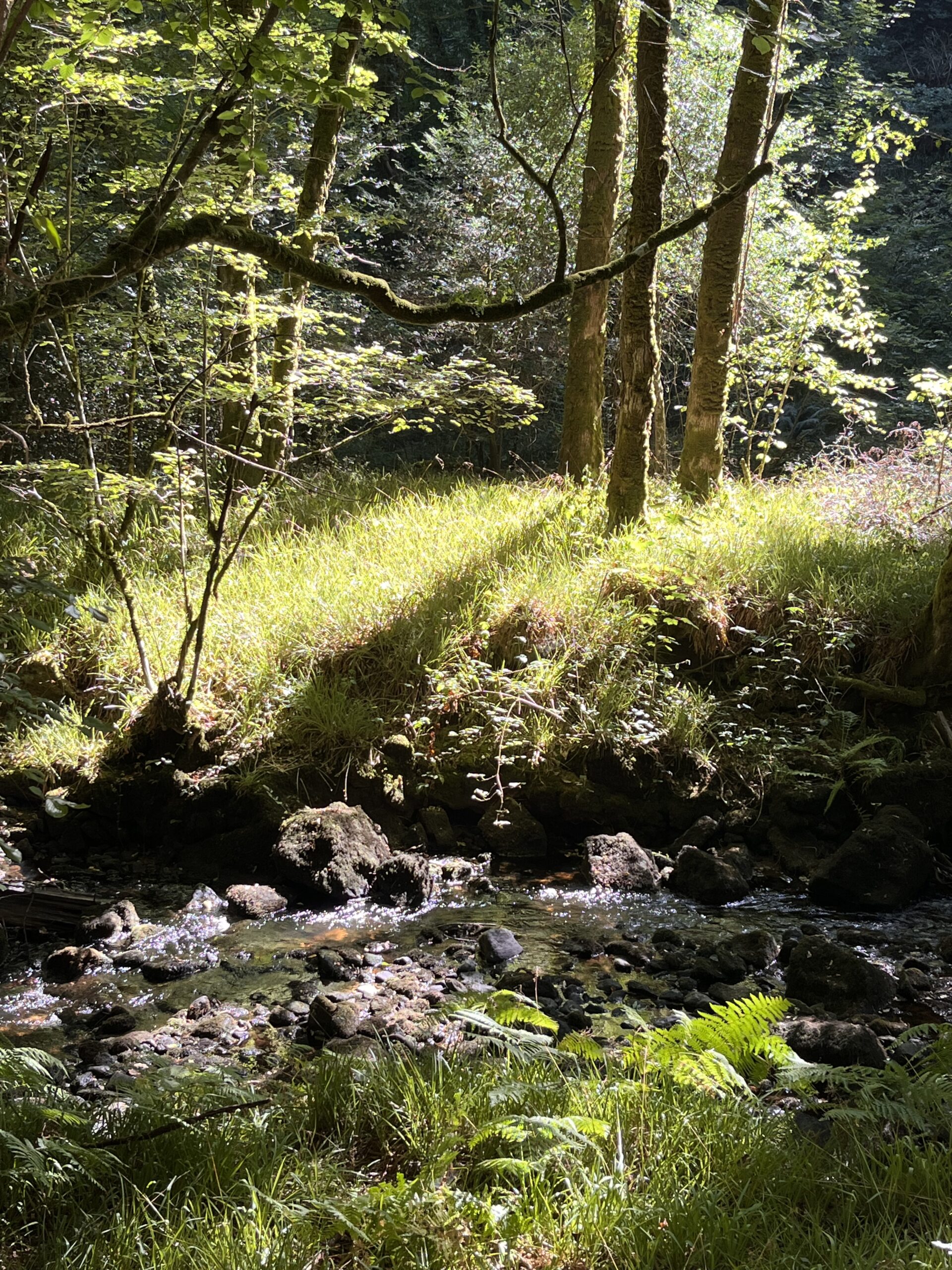
Why nature?
Why the name Wooden Table?
A wooden table stands on four solid legs – just like the four dimensions of my work. It is where people gather. Where decisions are made. Where direction becomes tangible. A table carries weight. It holds disagreement. It withstands pressure. Wood is the intersection between nature and business. It grows organically, yet becomes structure. It is shaped by time, pressure and craft – once built, it carries responsibility.
Wooden Table reflects how I work: connecting humanity and structure – grounded in nature, designed for responsibility.
Why should I invest in this work?
Because pressure does not disappear on its own. It compounds.
Under sustained pressure, even experienced leaders begin to operate in reaction rather than intention. Decisions become narrower. Conversations become shorter. Control increases. Trust decreases. Over time, this shapes the entire organization.
The cost is rarely visible at first.
Momentum slows, ownership thins out, and high performers disengage quietly. The organization keeps moving – but without real traction.
Investing in this work is not about being “nicer.” It is about protecting decision quality, leadership clarity and long-term performance.
Human leadership is no longer optional.
In times of AI, acceleration and constant change, it is the differentiator.
You can either address the patterns that shape how you lead — or let them shape your organization.
How do we work together?
I work in long-term partnerships, typically starting at six months.
Sustainable change — in leadership behavior, decision quality and organizational structure — requires continuity. The greatest impact unfolds when there is enough time to address immediate pressure while reshaping the patterns that create it.
This allows us to support critical moments in real time — board meetings, strategic decisions, leadership tensions — while building clarity and structural stability over time.
You have direct access when it matters. And we work deeply where it matters.
I work with a limited number of leaders at any given time.
Depth and sustained impact matter more than volume.
